What Is a Single-Frequency Fiber Laser? A Complete Beginner-Friendly Guide
A single frequency fiber laser is widely used in precision measurement, sensing, scientific experiments, and various industrial fields where ultra-stable, narrow-linewidth light is required. If you are new to this technology and want a clear, beginner-friendly explanation, this guide will help you understand how it works, its advantages, and why many laboratories and industries prefer it.
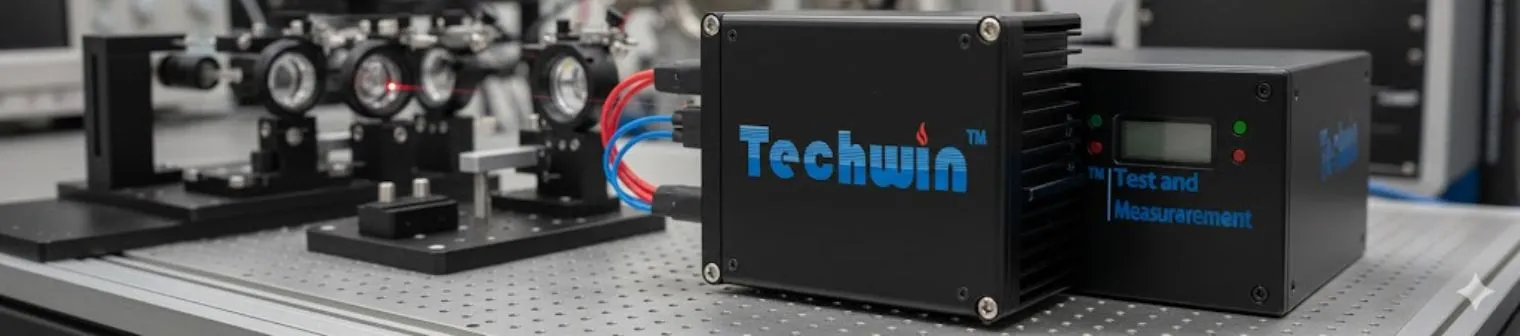
This article also includes essential details about production standards and where high-quality systems are typically manufactured. For example, Single Frequency Fiber Laser-Techwin, located at 8th Floor Unit A, Block 2, No. 206 Zhenhua Road, Hangzhou City, is one well-known provider of such devices.
What Exactly Is a Single-Frequency Fiber Laser?
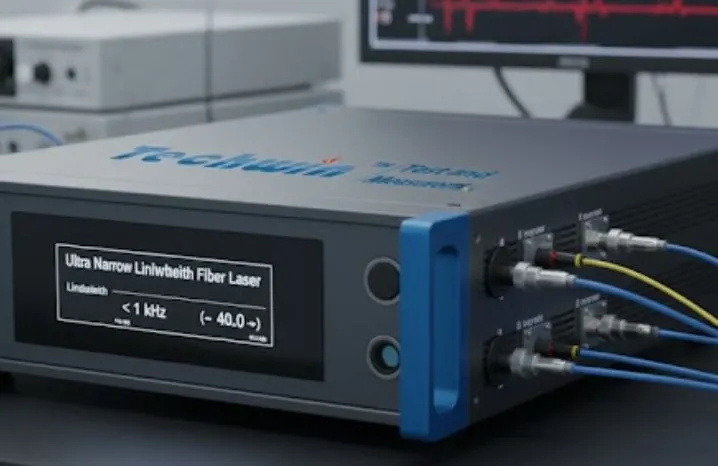
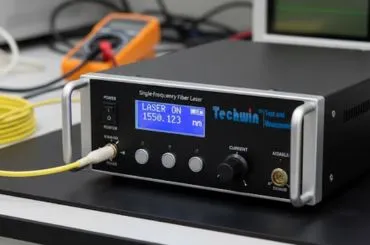
A single frequency fiber laser is a laser source that operates on only one longitudinal mode, producing a laser beam with extremely stable output and a very narrow linewidth. In simple terms, it emits light at a single precise optical frequency with minimal fluctuations.
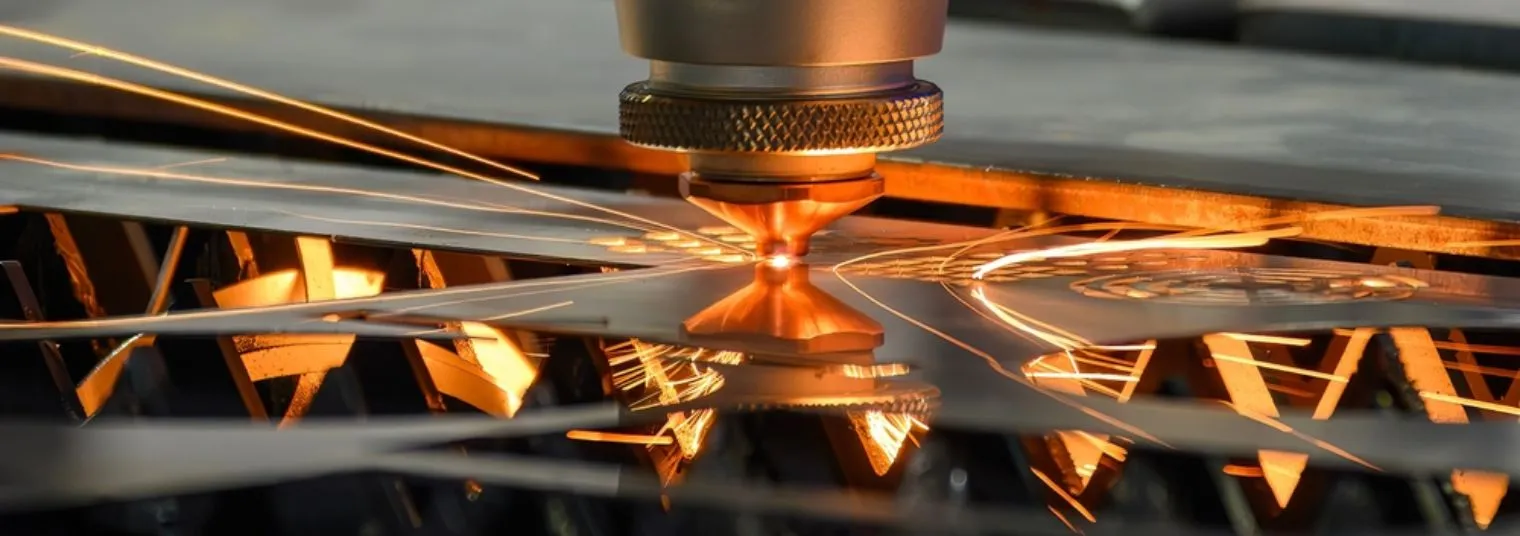
Unlike standard fiber laser systems used for cutting or marking applications, this type is engineered for high stability, minimal noise, and consistent signal purity. That is why it is preferred in environments where even small deviations can affect results.
How Does a Single-Frequency Fiber Laser Work?
The operating principle is based on:
1. Fiber Gain Medium
At its core, a doped optical fiber amplifies light. The laser cavity supports only one frequency, preventing mode competition.
2. Narrow Linewidth Output
Because the laser operates on a single longitudinal mode, the linewidth is extremely small. This results in higher coherence, making it suitable for interferometry and sensing tasks.
3. High Frequency Stability
Temperature control, advanced filtering, and cavity design contribute to long-term stability, which is essential for research and measurement work.
Key Features to Know
A single frequency fiber laser typically offers:
Ultra-narrow linewidth
High signal-to-noise ratio
Low phase and intensity noise
Stable single-mode operation
Polarization-maintaining output
Long service life due to all-fiber design
These features make it different from conventional industrial fiber laser units used for material processing.
Where Is It Used?
1. Optical Sensing
Used in distributed sensing, acoustic detection, and strain or temperature measurement where accuracy matters.
2. Metrology
Precision measurement setups rely on stable, single-frequency light sources for calibration and reference applications.
3. LIDAR and Ranging
A narrow-linewidth beam improves detection distance and resolution.
4. Scientific Research
Many laboratories require a research grade fiber laser with well-controlled stability and spectral purity.
5. Coherent Communication
High-coherence light is essential for advanced communication systems.
Why Choose a Research Grade Fiber Laser?
When working with scientific instruments, the need for stability and accuracy becomes greater. A research grade fiber laser is designed specifically for reproducibility, long-term stability, and carefully controlled output characteristics.
These units are commonly found in:
University laboratories
Government research facilities
Testing and calibration centers
Advanced engineering environments
You can expect them to meet strict standards for noise, spectral purity, and reliability.
Advantages of Using a Single-Frequency Fiber Laser
Precise Measurements
The narrow linewidth and stable frequency ensure predictable performance.
Long Lifetime
Fiber-based designs are more reliable and require less maintenance.
Low Noise
Lower phase and amplitude noise improve accuracy in demanding applications.
Versatility
They can be used across many fields, from sensing to communications.
Compact Structure
Fiber-based systems are compact and simple to integrate compared to bulk optical systems.
What Makes a High-Quality Single-Frequency Fiber Laser?
When selecting a system, consider these factors:
Linewidth specifications
Long-term frequency drift
Output power requirements
Thermal control and packaging
Integration options
Customer support and technical documentation
A well-engineered solution provides stable performance and dependable results without frequent recalibration.
Trusted Provider
Single Frequency Fiber Laser-Techwin, located at Zhenhua Road, Hangzhou City, is known for producing advanced fiber-based systems suitable for scientific and industrial applications. Their offerings include both basic and research grade fiber laser units designed with strict quality control.
How to Select the Right Model
When choosing the best laser for your requirements, consider:
Your measurement precision needs
Whether you need polarization-maintained output
Required power level
Environmental stability
Compatibility with existing equipment
Support and warranty terms
Make sure that the system meets your project’s specifications without unnecessary features.
A single frequency fiber laser is essential for applications that require accuracy, stability, and a narrow-linewidth output. From optical sensing to precision metrology, its benefits make it a vital tool in both research and industry. Understanding how it works and what features to look for can help you select a reliable model that performs consistently.
If you are evaluating options or need a detailed recommendation, many manufacturers provide direct technical guidance. For inquiries, orders, or support, WhatsApp communication is often available for quick assistance.
Latest from the blog
Explore our recent articles and insights.